


Globally-Proven, Industry-Leading Biochar Feedstock Drying Technology
Successful biochar production starts with controlling feedstock quality.
FlowDrya gives producers full control over moisture, contaminants (sand), consistency, energy use and throughput before the biomass feedstock reaches the pyrolysis reactor. Efficient drying concentrates the carbon content and consistency of your biochar feedstock, conditioning it for onward processing whilst reducing the energy required to evaporate water during pyrolysis.
Introducing Haliburton Forest Biochar…
Haliburton Forest is a leading Canadian producer of biochar, using sustainably-managed forests and sawmill biomass residue to create high-quality biochar, maximising the value of their available resources.
The team at Haliburton understand that drying is fundamental to unlocking premium-level biochar and carbon credits; and that is why they chose the FlowDrya to optimise their biochar carbon content. By efficiently reducing the moisture content of their woodchip and bark material, they significantly increased the consistency of their feedstock before pyrolysis and ultimately, improved the carbon content and biochar yield.
Read on to learn more; or visit Haliburton’s website to learn more about their biochar operation >
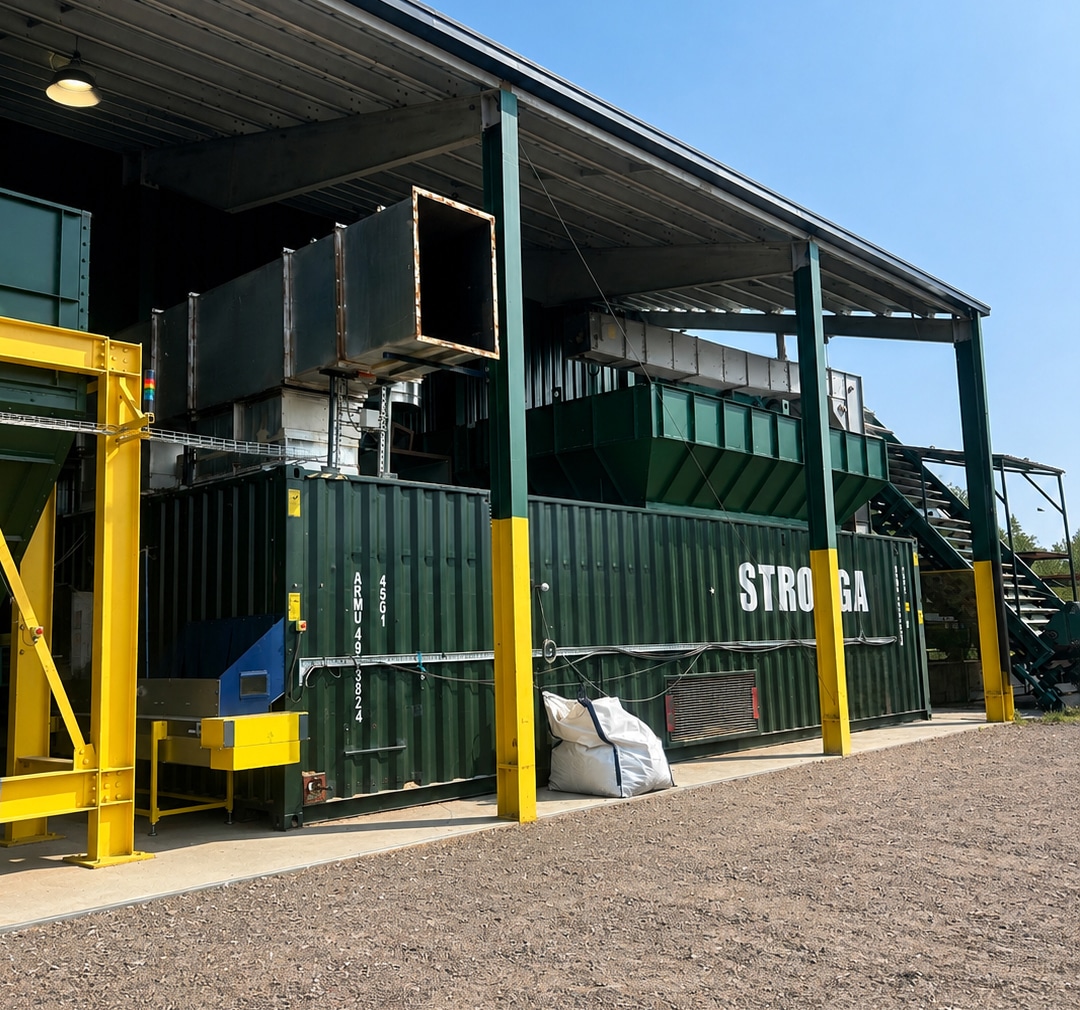
FlowDrya equipment onsite at Haliburton’s biochar production site in Ontario, Canada.
How Can I Improve My Biochar Feedstock Using FlowDrya?
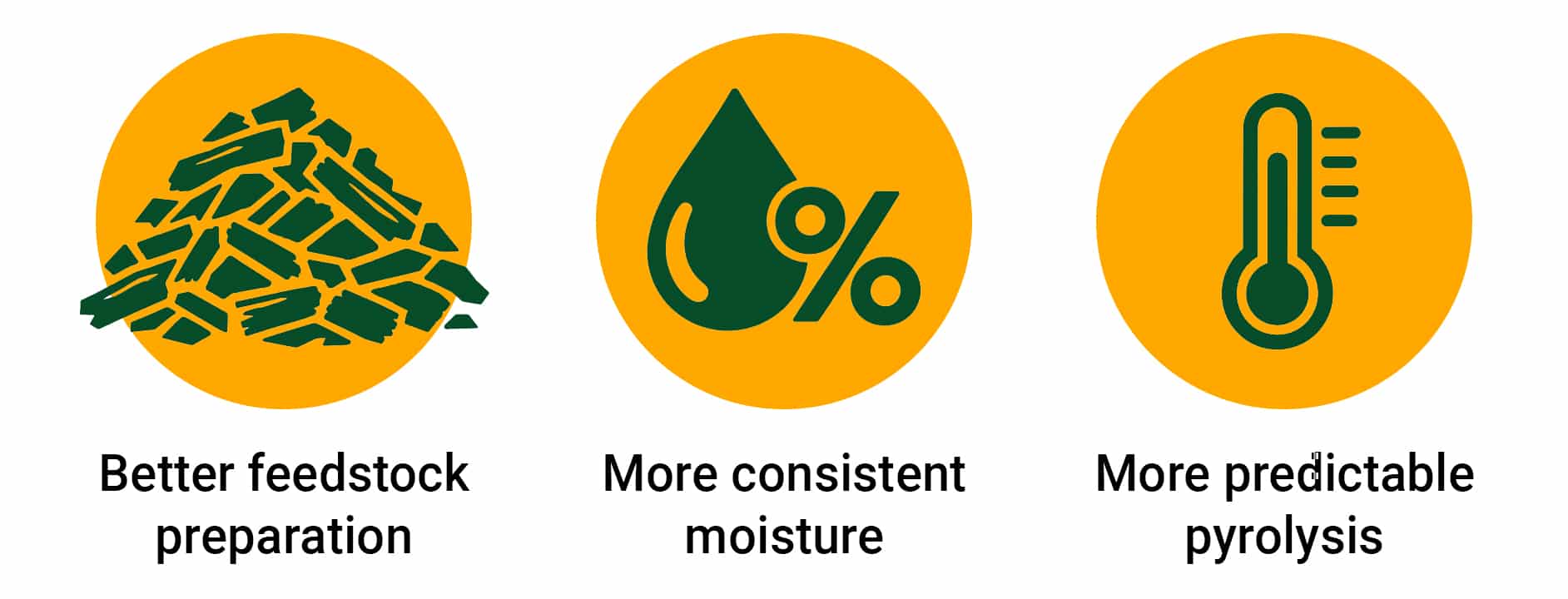
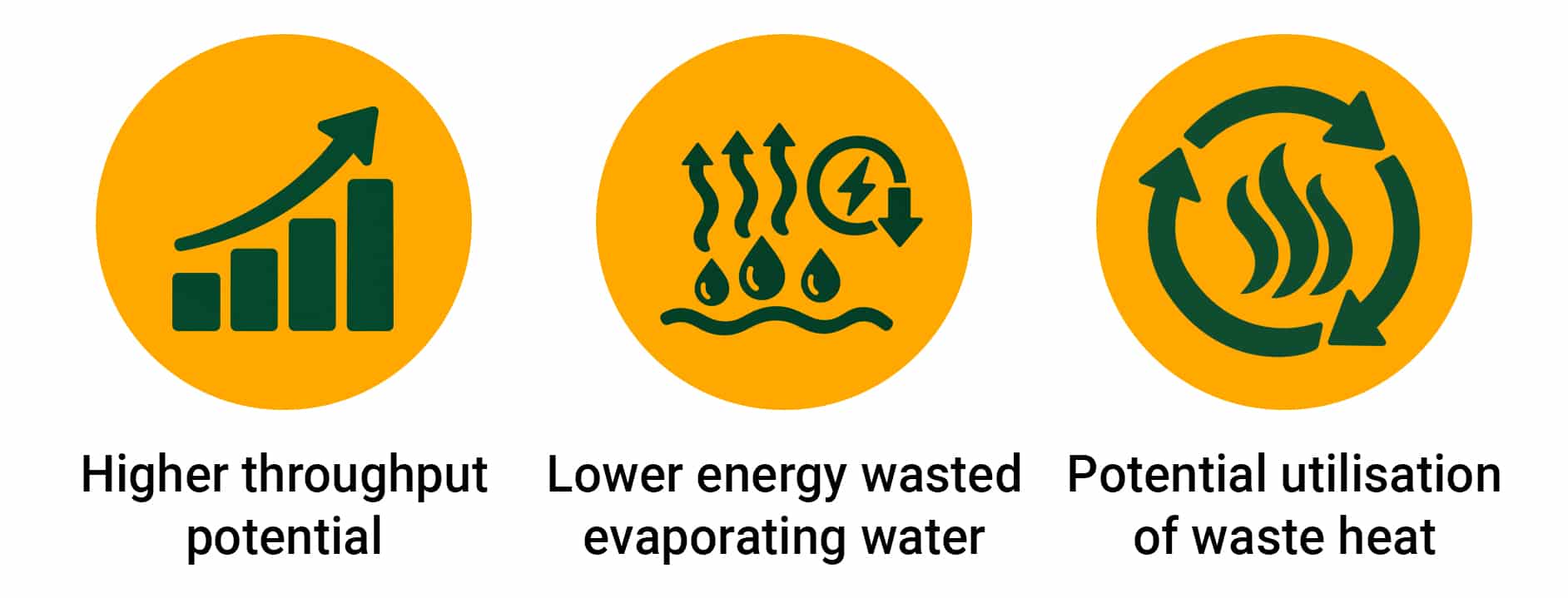
FlowDrya helps biochar producers control three critical aspects of feedstock preparation: (1) Moisture content; (2) Material consistency; (3) Heavy fines/mineral contamination. Drying improves pyrolysis efficiency, throughput and consistency, while reducing the energy wasted evaporating water, giving your pyrolysis reactor a more predictable, consistent feedstock.
Wet feedstock = more energy consumed evaporating water = variable pyrolysis/biochar quality
Stronga have significant experience in drying biomass to different moisture-content parameters, including those specified by Haliburton Forest - 45% wet basis to <10% dry, ensuring optimal biochar production. Consistent moisture removal enables: Uniform biochar quality ✓; High carbon content/low ash content/good porosity & low volatile matter ✓; Avoidance of uneven heating & incomplete pyrolysis ✓; More throughput & continuous processing.
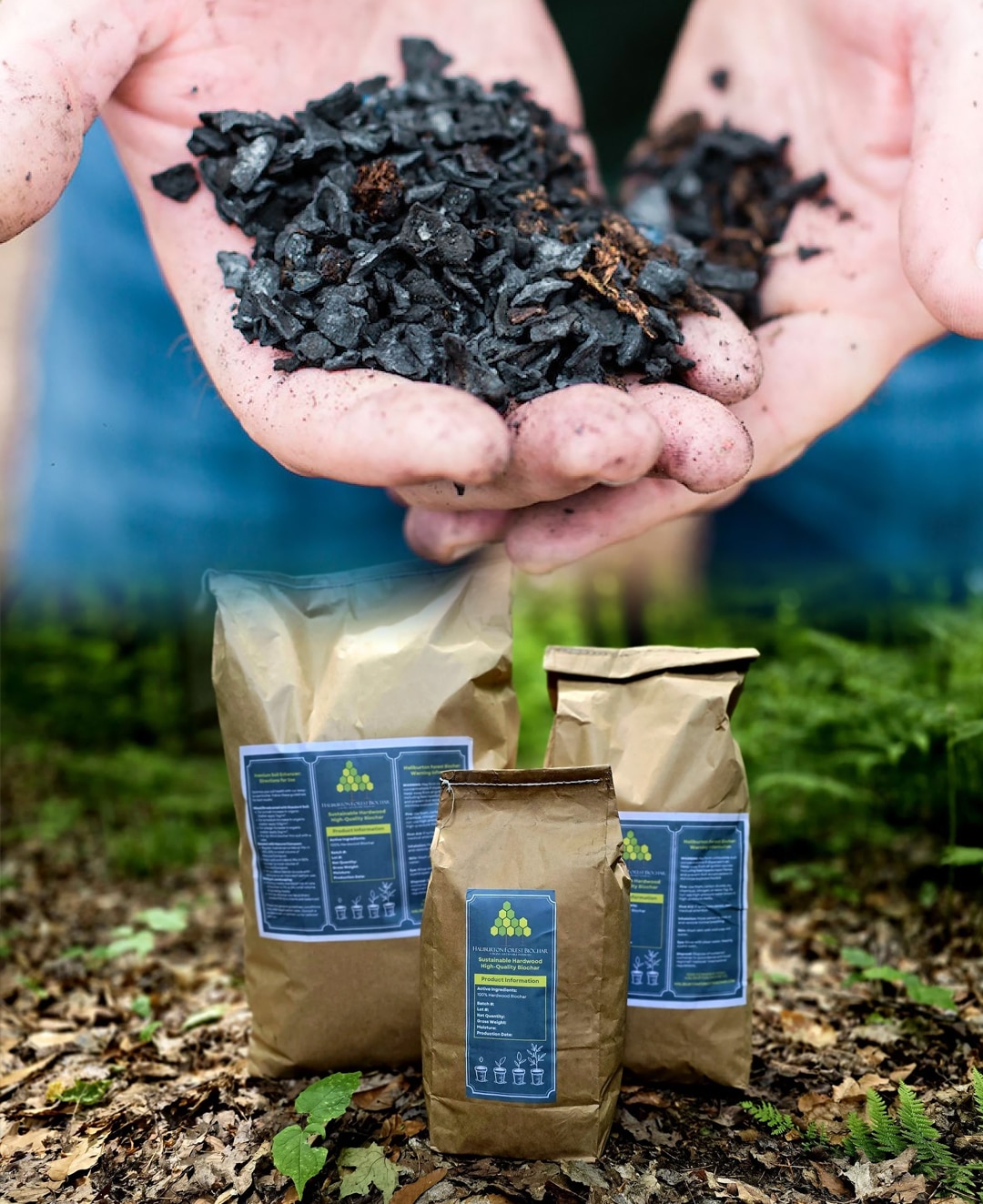
Haliburton’s 100% sustainable hardwood biochar.
How Does Fines Fraction Screening Improve Biochar Quality?
FlowDrya maintains consistent material output quality by screening the heavy "fines" fraction as part of the drying process (see photo below). The integrated fines separation system removes contaminants; glass, stones, dirt, grit, silica and sand, cleaning the primary product stream from minerals that represent a significant problem for the pyrolysis reactor.
FlowDrya’s fines fraction screening:
• Extracts heavy fines without interrupting throughput of the primary material stream.
• Automatically discharges the contaminant fraction via the dedicated fines auger, separating it from the primary material stream without requiring additional, costly screening systems.
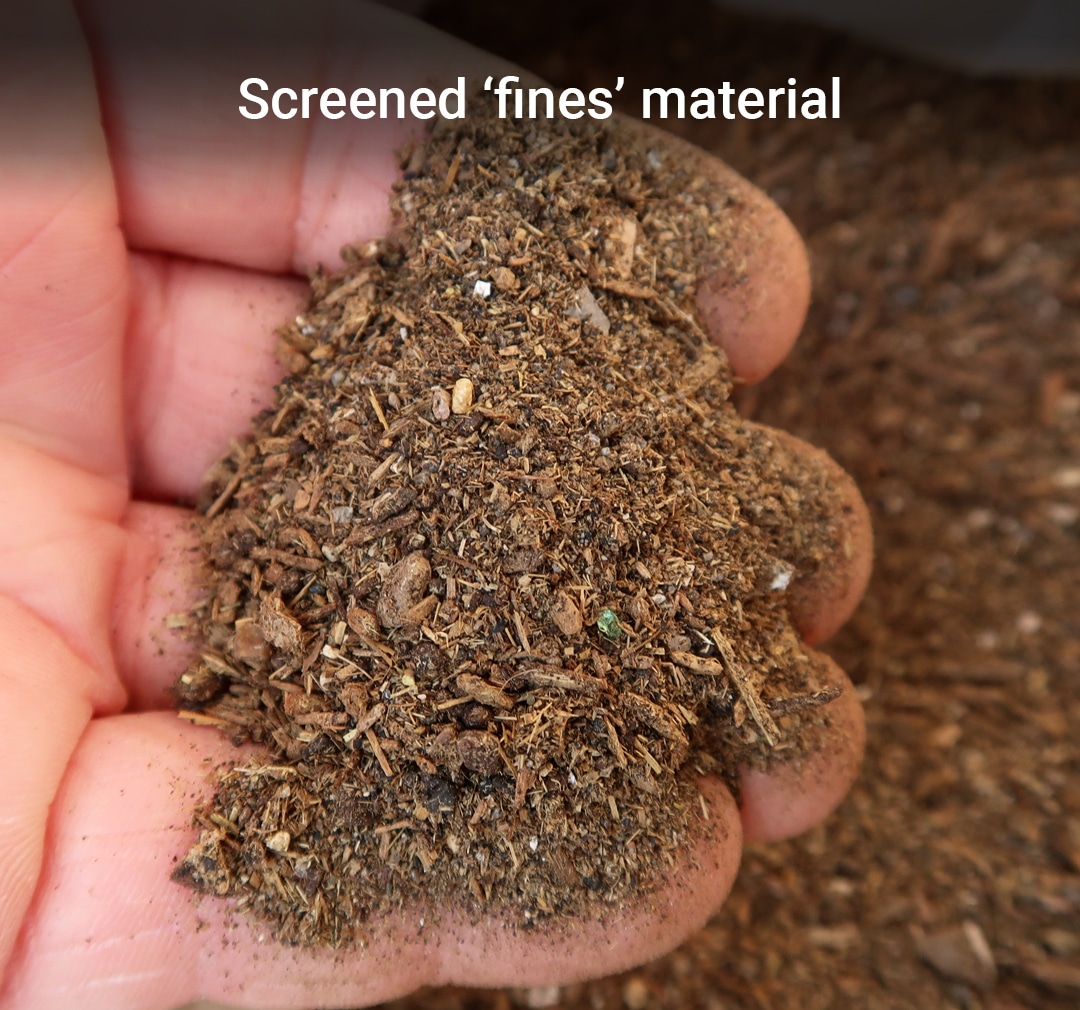
FlowDrya’s integrated screening function removes unwanted dusty, gritty material from the biochar feedstock, reducing reactor maintenance, increasing throughput and improving overall process performance.
Extending the Service Life of Your Pyrolysis Reactor
Automatically separating the heavy fines fraction from the primary dry material delivers a cleaner, more consistent and a better-quality dry biomass feedstock for improved biochar production. Removing abrasive material from the dryer output reduces reactor wear, erosion of components and blockages causing process instability.
What’s more, abrasive contamination minerals increase the inorganic fraction content of the feedstock and increase ash content, occupying pore volume in the biochar. That’s why Haliburton use FlowDrya in a downdraft configuration to improve fines screening, especially with their bark material.
| Parameter | Effect of abrasive contamination | Effect of high moisture biochar feedstock | Economic consequence |
|---|---|---|---|
| Ash % | Increases significantly due to inert mineral matter | - | Higher ash reduces product quality, economic value and increases ash handling |
| Organic carbon % | Decreases through dilution by sand/soil etc. | - | Less carbon per tonne of contaminated/wet feedstock and lower carbon value |
| Carbon yield | Decreases per tonne of feedstock because more mass is inert mineral | Decreases per tonne wet feedstock because less of the incoming mass is dry concentrated biomass | Lower saleable biochar and lower carbon-credit income |
| Porosity | Mineral particles dilute and can occupy/block pore structure | High moisture fills pores during processing/handling | Potential reduction in functional biochar value, particularly where high porosity is commercially important |
| Energy consumption | Increases because sand/minerals must be heated but provide no useful energy | Increases substantially because water must be heated and vaporised | Higher fuel/energy cost per tonne of useful biochar |
| Throughput | ughput because part of the feed is inert material | Lower effective dry-biomass throughput because % of the feed is water | Fewer tonnes of useful biomass processed per hour and higher cost per tonne of biochar produced. Less saleable biochar and fewer carbon credits. |
FlowDrya Is Engineered Around Your Requirements
Stronga's engineering team collaborated with the team at Haliburton Forest to achieve a highly efficient, high-yielding biochar operation; sizing the FlowDrya correctly to the throughput required and energy available. Haliburton have since successfully integrated a FlowDrya that suits their climate and requirements, resulting in a highly successful drying operation with minimal seasonal variation in drying throughput.
Our engineers configure each biomass dryer to accept a range of different heat sources; including the utilisation of residual heat from the pyrolysis process as an energy source (flue gas/water etc.). Our range of different modular configurations are designed to suit the specific qualities of each individual, unique project.
FlowDrya uses a hydraulic moving floor with few mechanical components; contributing to a low-maintenance, long-life design. The range of top-hopper in-feed options maximise time between reloading, enabling autonomous overnight running; a significant benefit compared to other labour-intensive drying solutions.
FlowDrya's low-temperature, indirect-air drying and stop-start moving-floor system ensure a super-low fire risk compared with alternative dryers available in the market. Stronga’s structured matching process gives customers clarity early in our collaboration.
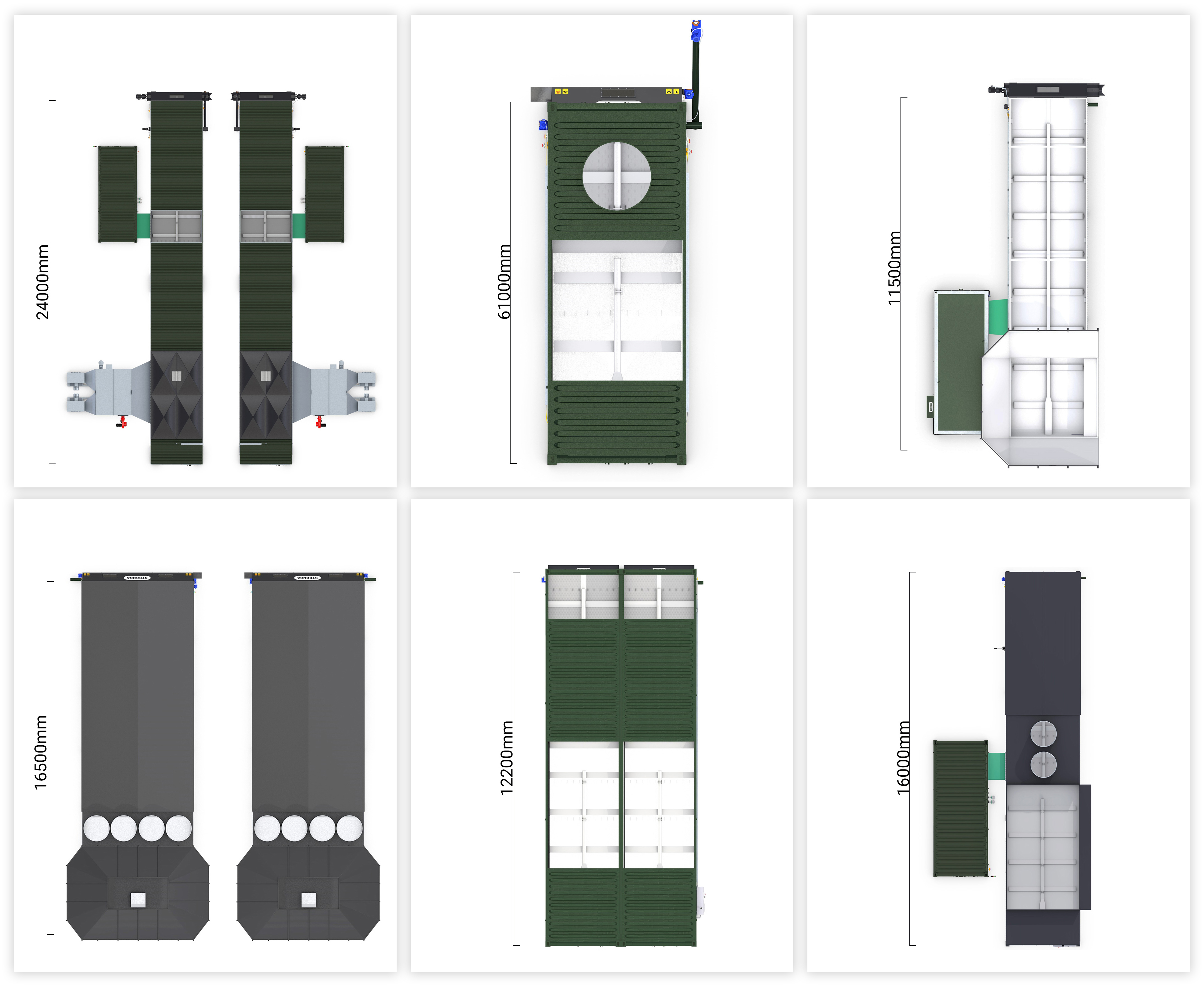
Examples of various FlowDrya configurations; delivering market-leading performance across a range of different wet materials – wood chips, sawdust, digestate fibre, SRF, RDF and more.
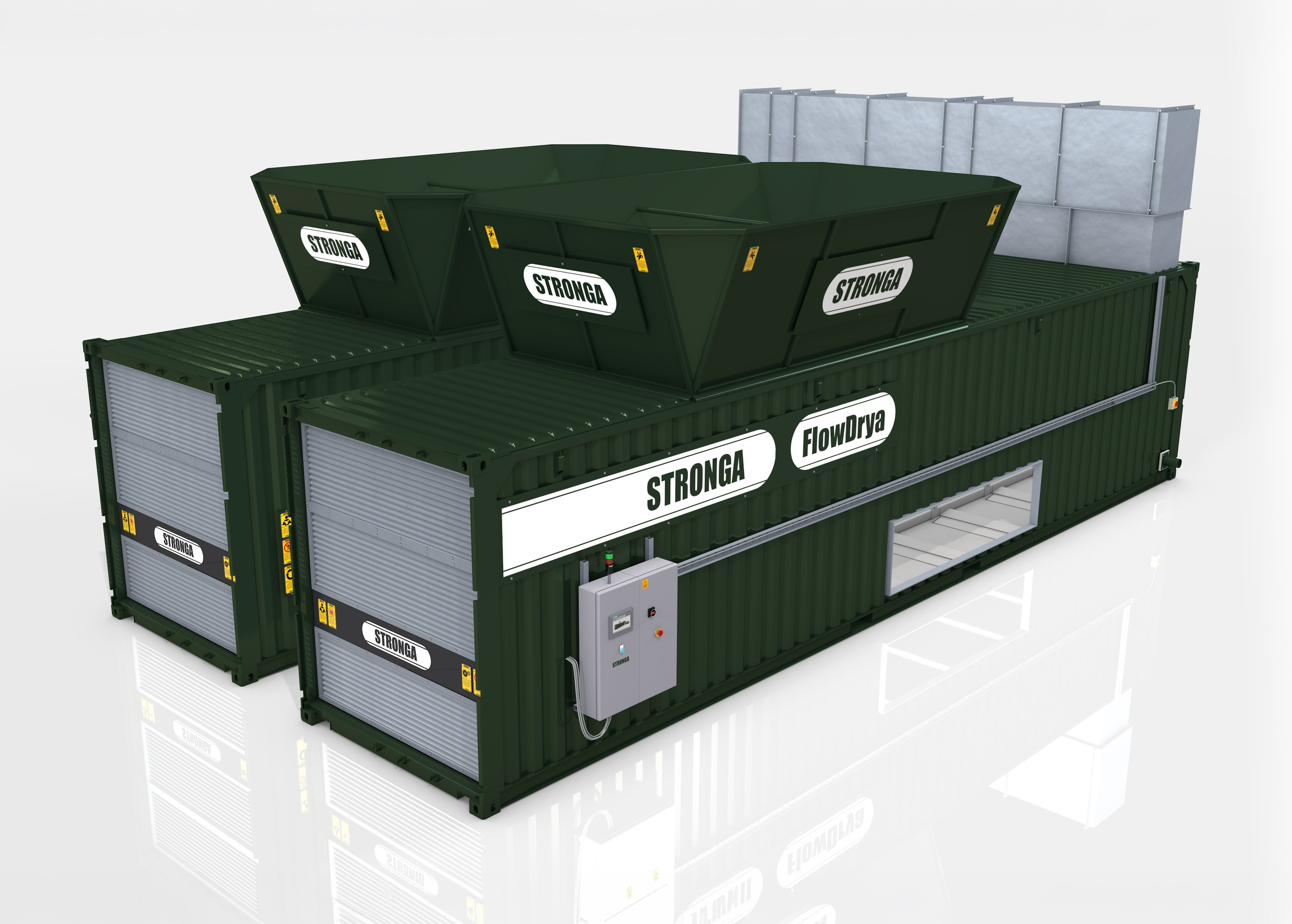
3D visualisation of Haliburton Forest’s biochar feedstock drying system.
Why Should I Invest in a Feedstock Dryer?
Since 2023, the annual production of biochar has almost tripled (up to 2026), with producer revenue increasing by nearly $200 million in the same period.
In Canada, the Government of Ontario are investing over $9 million in their Forest Biomass Program, which includes research and innovation projects such as sustainable biochar production. This rapid biochar market momentum, combined with targeted public funding like Ontario's $9 million Forest Biomass Program, creates new opportunities for biochar producers to develop and optimise projects.
Biochar production, brings three economic advantages:
1) It generates carbon removal revenue: Biochar can provide an additional revenue stream through carbon removal markets, where eligible projects may generate income from verified carbon removal credits.
2) It allows for sale of a valuable physical product: Biochar can be sold into markets including soil amendment, agriculture, horticulture and other applications, creating a physical product revenue.
3) It creates a low-carbon offset alternative to fossil materials.
These advantages allow for a rapid return on investment on the FlowDrya biochar feedstock dryer, which is designed to optimise biochar production.
Ready to Optimise Your Biochar Feedstock?
Tell us about your feedstock, moisture target, throughput and available heat source. Let our experienced team configure a FlowDrya system around your process and biomass drying requirements.
Discuss your biochar drying project: enquiries@flowdrya.com
Share this post