


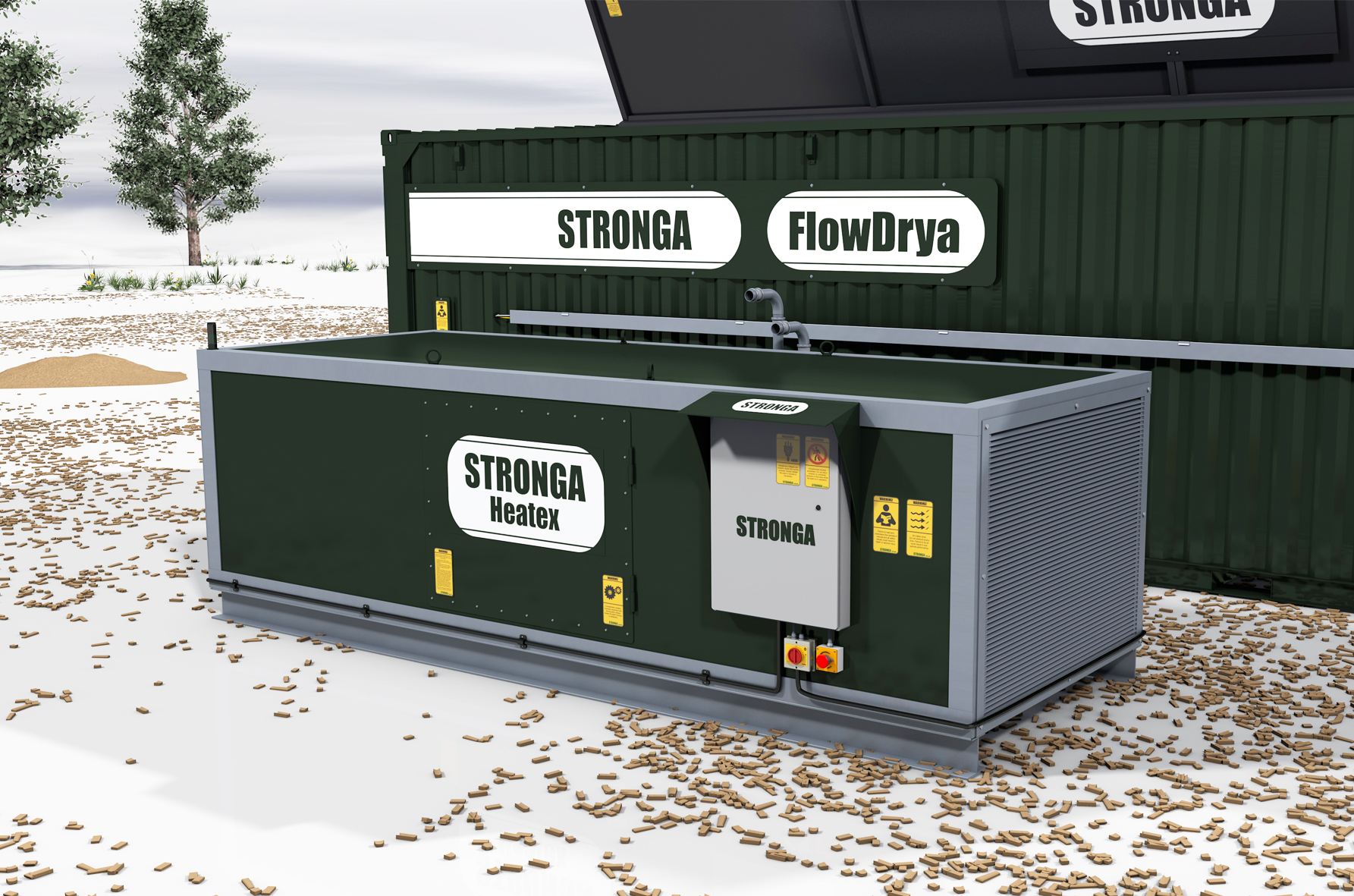
Thermal energy solutions for drying biomass & more
Effective management of drying airflow is fundamental to achieving uniform, energy-efficient and economical drying of wet feedstocks, including woodchips, solid recovered fuel (SRF), refuse-derived fuel (RDF) and other wet materials.
Stronga drying systems are designed to work with diverse thermal energy sources, accommodating different operating temperatures and heat delivery requirements. Available options include surplus heat recovered via the Heatex from industrial processes, indirect-fired gas burners, flue gas heat recovery and other sources of thermal energy. This adaptability enables each dryer to be configured around the most suitable, cost-effective and sustainable heat source available locally. The result is a tailored industrial solution capable of delivering reliable drying across a wide range of feedstocks.
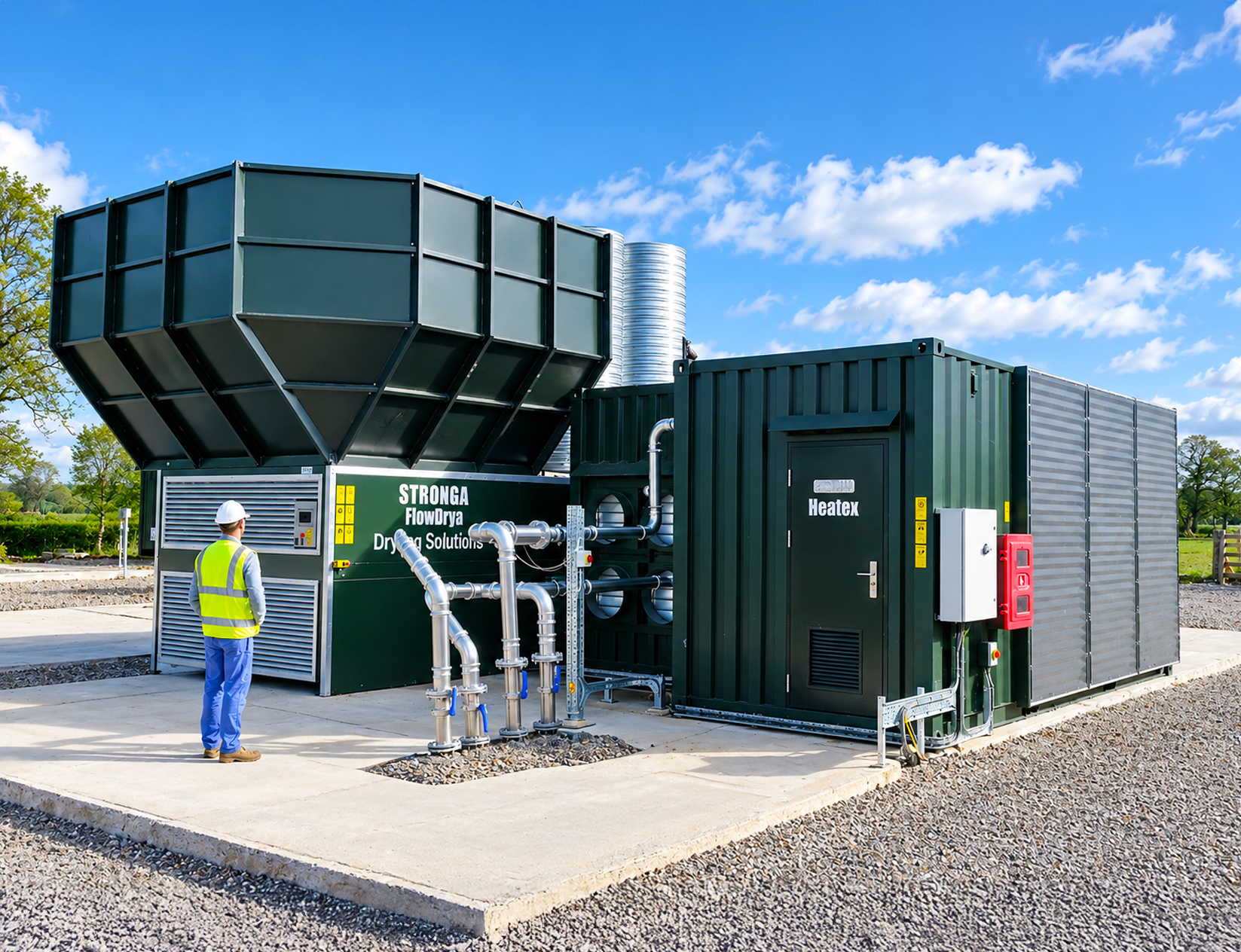
Thermally efficient heat exchange
When paired with correctly-specified heat exchangers, fans and airflow control systems, FlowDrya can integrate with a broad range of industrial heat sources. Rather than favouring a single technology, Stronga works closely with each client to assess the available thermal energy and configure the Heatex heat exchange system accordingly, delivering the optimum heated airflow for the dryer.
Almost any industrial process that generates surplus heat may offer an opportunity for energy recovery via the Heatex. By capturing and reusing otherwise wasted thermal energy, businesses can improve overall energy efficiency and reduce the cost of drying wet materials. Common sources of recoverable waste heat suitable for drying applications include:
| Thermal energy source | Typical applications & benefits |
|---|---|
| Hot Water Systems | Biomass boilers, CHP plants, district heating and industrial cooling circuits. Typically operates at 60–95°C+, using low-grade heat for efficient drying. |
| Steam Thermal Energy | Steam boilers fired by gas, oil, biomass or recovered fuels. Steam-to-air or steam-to-water heat exchangers provide controlled, efficient heat transfer. |
| Indirect Gas Burners | Natural gas, LPG or biogas supplying heat through indirect gas-to-air heat exchangers. Ideal for standalone drying plants with suitable fuel availability. |
| Biomass Furnaces & Boilers | Woodchips, bark, sawdust and agricultural residues provide renewable heat for sawmills, pellet plants and biomass processing facilities, from hundreds of kW to multi-MW. |
| Flue Gas Heat Recovery | Recovers heat from boilers, furnaces, engines, kilns and incinerators, transferring energy into clean drying air while reducing wasted heat. |
| Cement Industry Waste Heat | Recovers energy from kiln exhaust, clinker cooler air and other process streams, providing substantial heat for drying SRF, RDF and alternative fuels. |
| Industrial Waste & Residual Heat | Surplus heat from CHP engines, compressors, pyrolysis, gasification and biogas plants can reduce drying costs by converting otherwise wasted energy into useful output. |
| Electric Air Heaters | Grid electricity, renewable power or surplus generation provides controllable heat, particularly for smaller installations or hybrid drying systems. |
| Specialist & Emerging Heat Sources | Pyrolysis surplus heat, syngas, solar thermal and hybrid energy systems offer additional options for flexible, lower-carbon industrial drying. |
Recovering wasted thermal energy
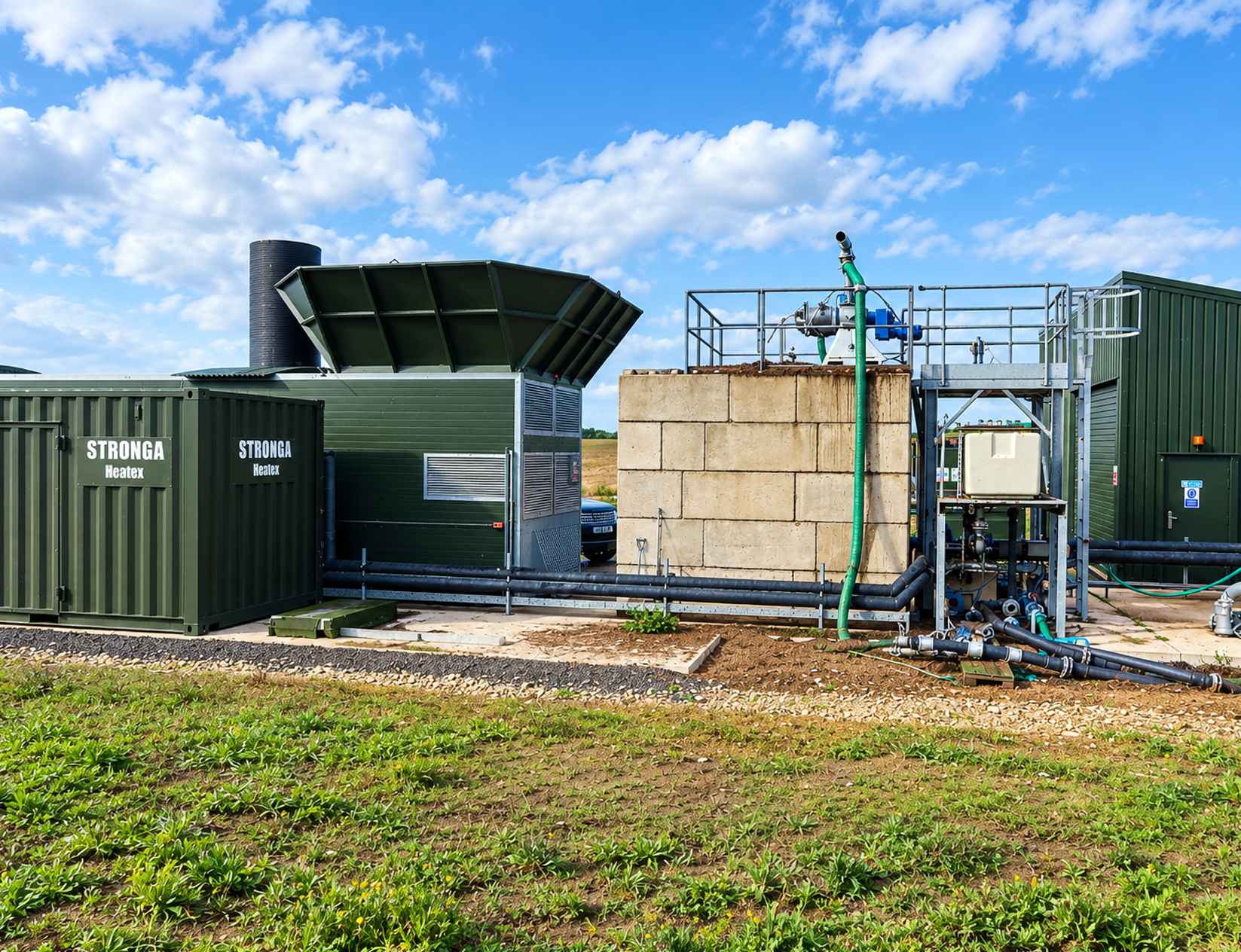
Intelligent. Modular. Scalable.
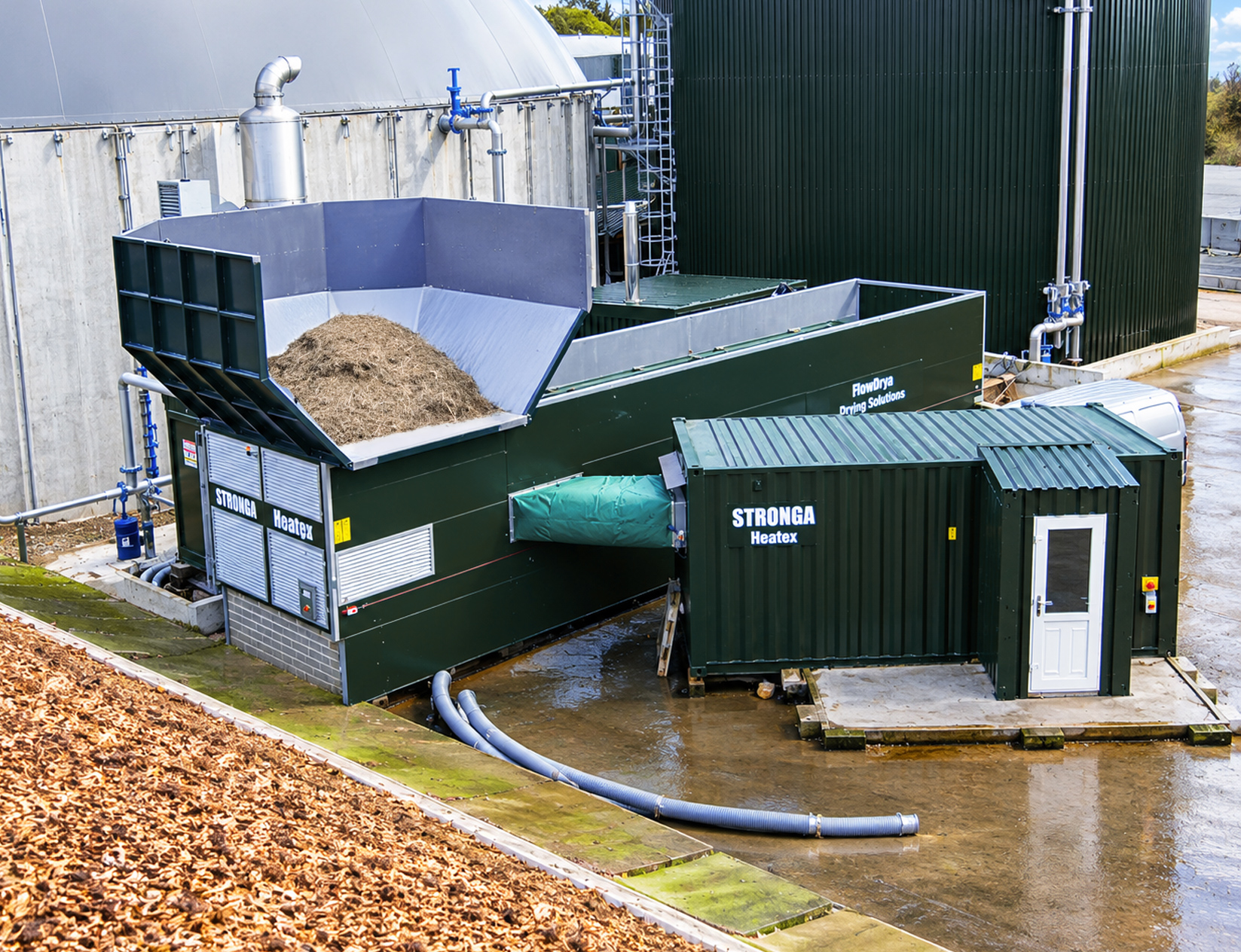
Together with the FlowDrya, Heatex air handling units are intelligently designed, modular and scalable, with each system configured to meet the specific requirements of the project. By optimising air temperature, airflow and pressure, Heatex delivers the controlled thermal performance needed for efficient drying, using either recovered waste heat or primary energy sources.
Energy efficiency is built into the design from the outset to help minimise operating and ownership costs. Each Heatex incorporates high-performance, direct-drive plug fans and deep-core heating coils, while fully insulated designs reduce heat loss and maintain excellent thermal efficiency throughout the drying process.
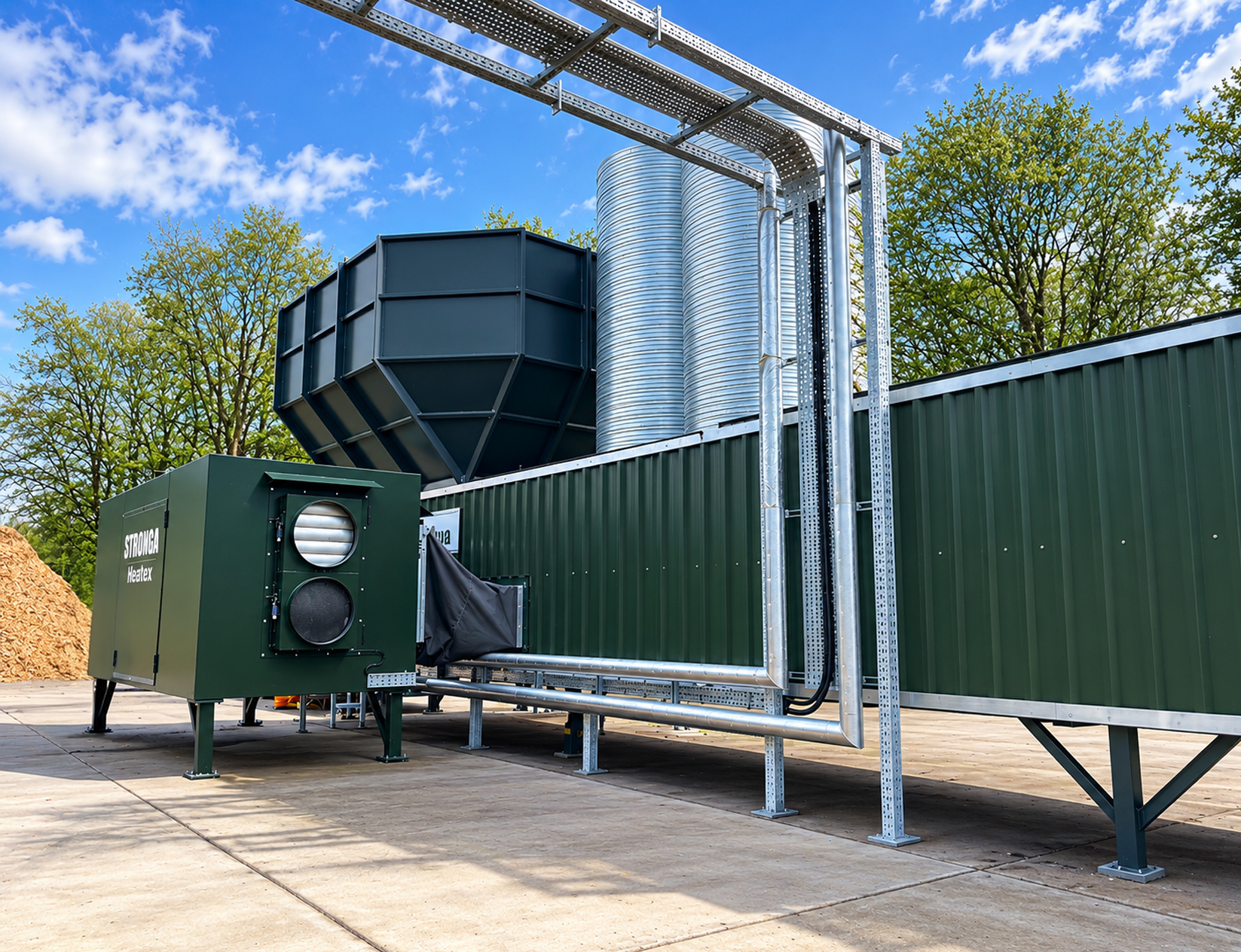
Affordable. Bespoke. Reliable.
Bespoke system design. Stronga evaluates key project parameters, including site location, drying capacity, ambient conditions, material characteristics and available heat sources, to engineer a tailor-made Heatex unit. Each heat exchanger is configured to deliver the optimal temperature, airflow and pressure for the adjacent FlowDrya, maximising drying efficiency and performance.
Built for high-duty operation. Heatex systems are engineered for demanding, year-round industrial operation, combining robust construction with proven reliability. With numerous units operating successfully in the field, Heatex provides dependable thermal energy delivery to support consistent drying performance over the long term.
Converting thermal energy into drying air
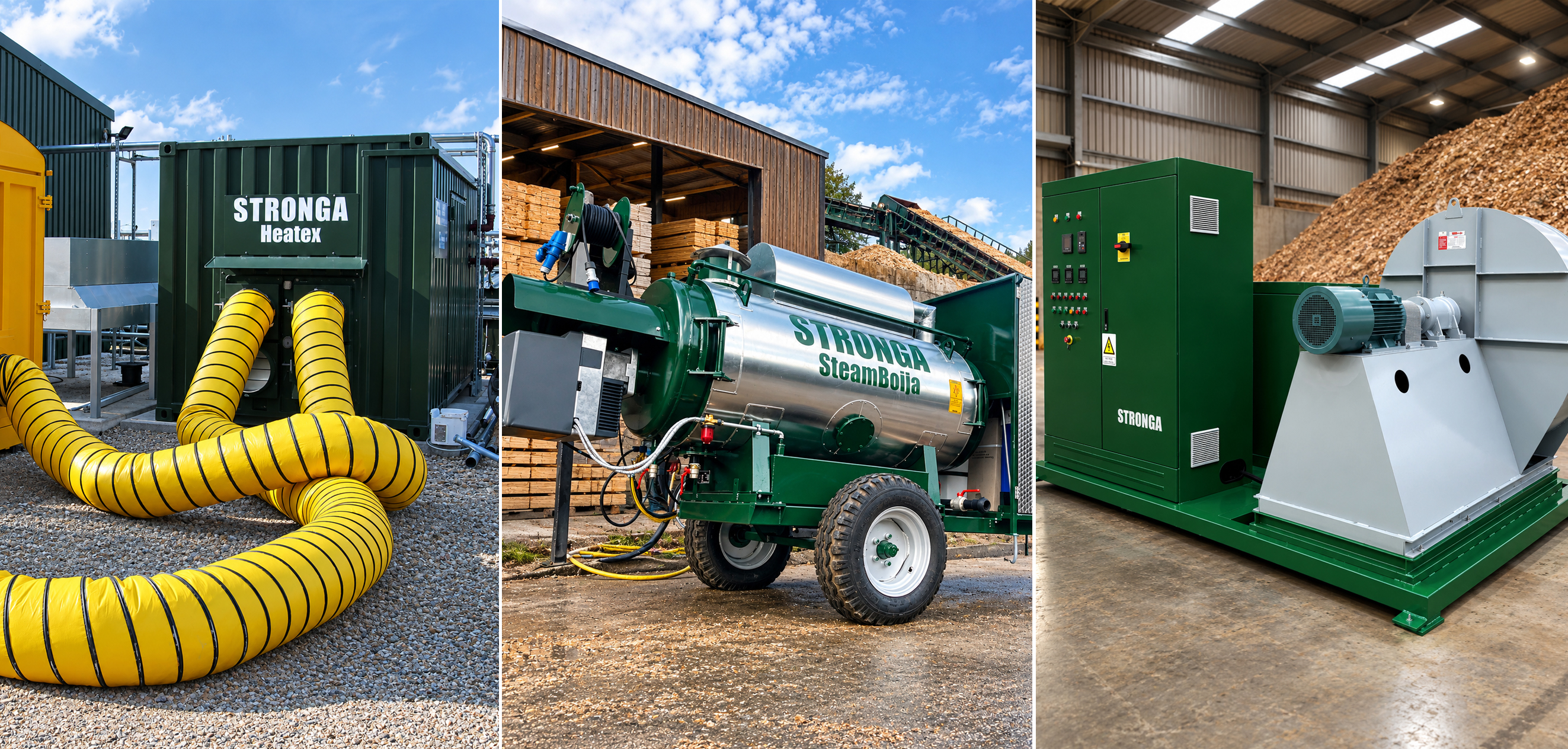
Stronga specialises in bespoke, high-performance heat exchangers for industrial drying processes, converting available thermal energy into controlled drying air for FlowDrya and horizontal airflow (HAF) drying containers. Depending on the project, Heatex can incorporate a range of indirect heat exchange technologies, including:
✔ Water and steam heating coils for hot water, process steam and low-grade waste heat.
✔ Finned-tube and wide-fin coils for efficient heat transfer, including dusty environments.
✔ Gas-to-air and air-to-air heat exchangers for fuel-fired heating and industrial waste heat recovery.
✔ Custom heat exchange solutions tailored to the available heat source and drying requirements.
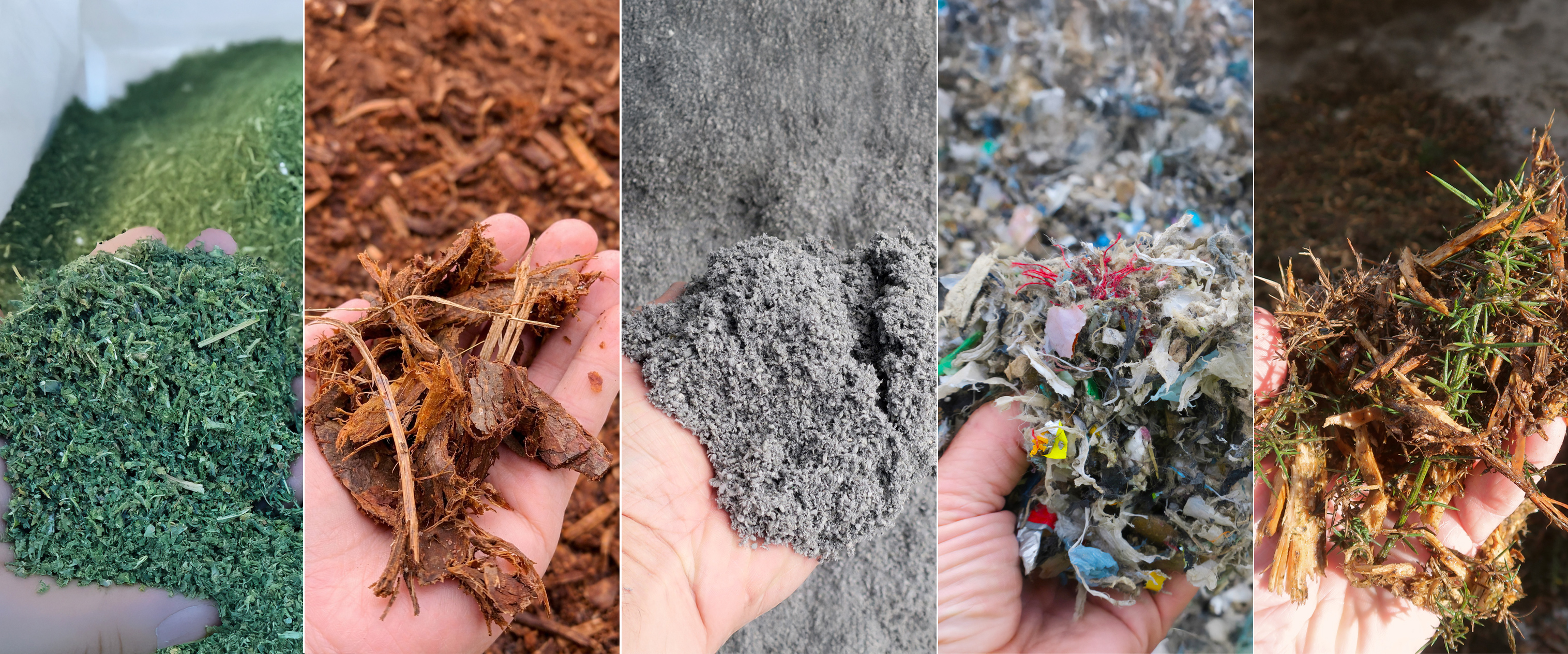
With experience across woodchips, grain, digestate fibre, SRF, paper pulp, industrial hemp and other bulk materials, Stronga configures each Heatex system to deliver reliable, efficient drying performance. Indirect heat transfer helps ensure clean, controlled drying air, regardless of the heat source.
From residues to revenues
Drying wet materials, by-products and bulk solids can unlock new commercial opportunities by improving storage stability, enhancing fuel quality and preparing materials for further processing. FlowDrya and Heatex systems help businesses recover value from resources that might otherwise be underutilised. Potential applications include:
✔ Industrial hemp drying – Drying and stabilising hemp biomass for further processing, including CBD extraction.
✔ Waste wood drying – Reducing moisture content to produce higher-calorific-value wood fuel for biomass energy generation.
✔ Crops & animal feed – Drying and preserving high-value agricultural crops, feedstocks and feed ingredients.
✔ Paper pulp drying – Processing suitable paper fibres and pulp into absorbent animal bedding and other useful products.
✔ SRF & RDF drying – Reducing moisture in SRF and RDF to improve fuel quality and support energy recovery.
✔ Biomass & industrial by-products – Drying digestate fibre, sawmill residues and other wet materials for reuse, recovery or onward processing.
By combining efficient industrial drying with the right downstream process, businesses can reduce waste, improve material usability and create new revenue streams from valuable resources.
Intelligent controls & airflow management
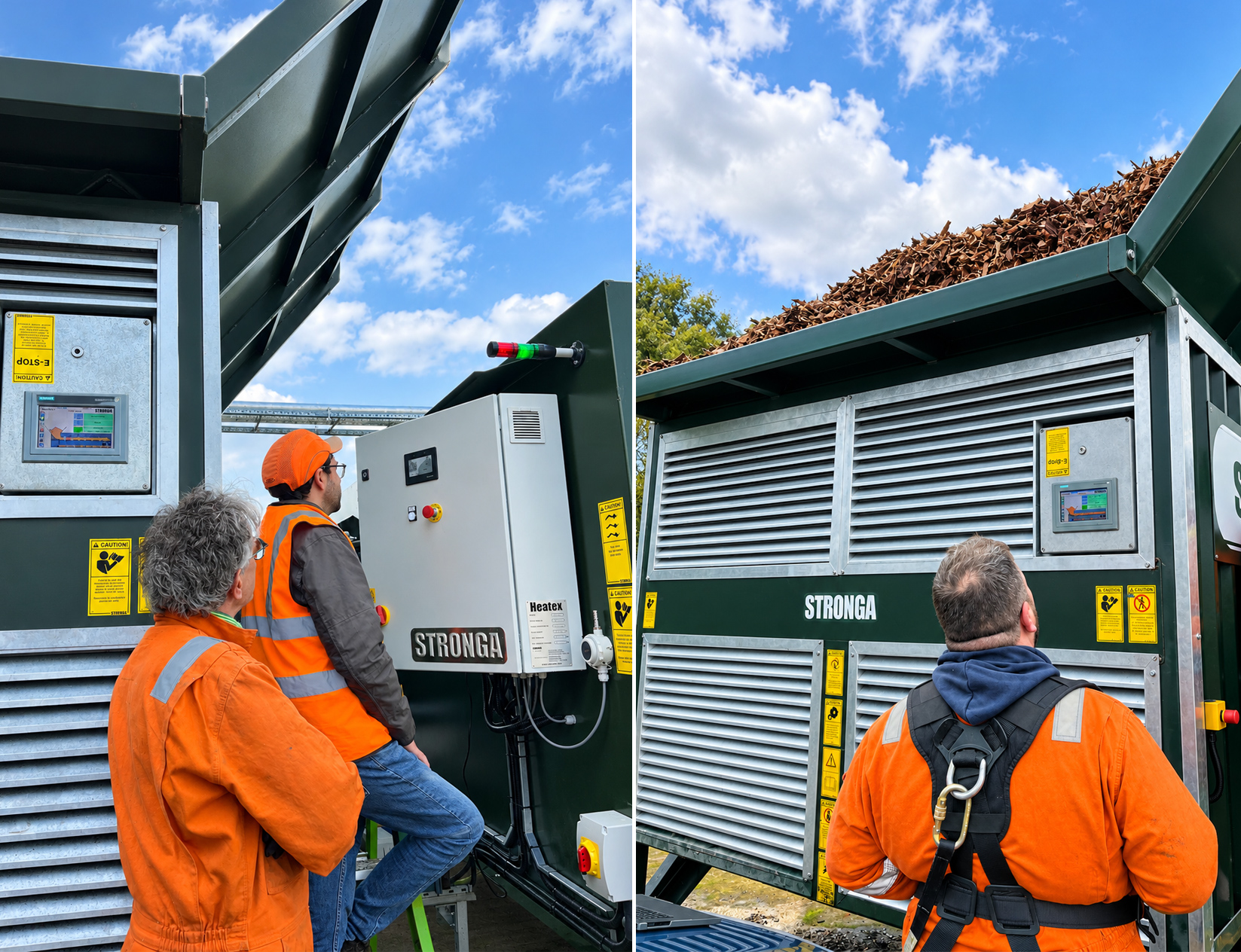
Intelligent, project-specific control systems are designed to optimise drying air temperature, airflow volume and pressure for the material being processed. Integrated sensors monitor key operating parameters, enabling automatic adjustment of set points to improve drying efficiency, energy utilisation and process stability. Where fitted, the HMI provides intuitive control and monitoring, including:
Automatic set-point control – Regulates heat input, fan speed and airflow to maintain the required drying conditions.
Air-off temperature perature control – Optimises drying air temperature, including for temperature-sensitive materials.
Return temperature control – Maintains specified return water temperatures for compatible heat sources, including biogas engines and CHP systems.
Live monitoring & data recording – Displays key operating parameters, with trend visualisation and recording to support performance optimisation.
Manual & remote control options – Enables manual fan-speed adjustment, with potential for remote monitoring and control via PC.
Each control package is configured around the available thermal energy source and drying requirements. For water-based systems, sensors monitor incoming water temperature and pressure, allowing the system to respond when heat availability falls or becomes insufficient. Controls can also accommodate fluctuating heat supply and changing operating conditions. Commissioning and operator training help ensure your team understands the system and can manage it confidently, safely and efficiently from day one.
High-efficiency plug fans & heating coils
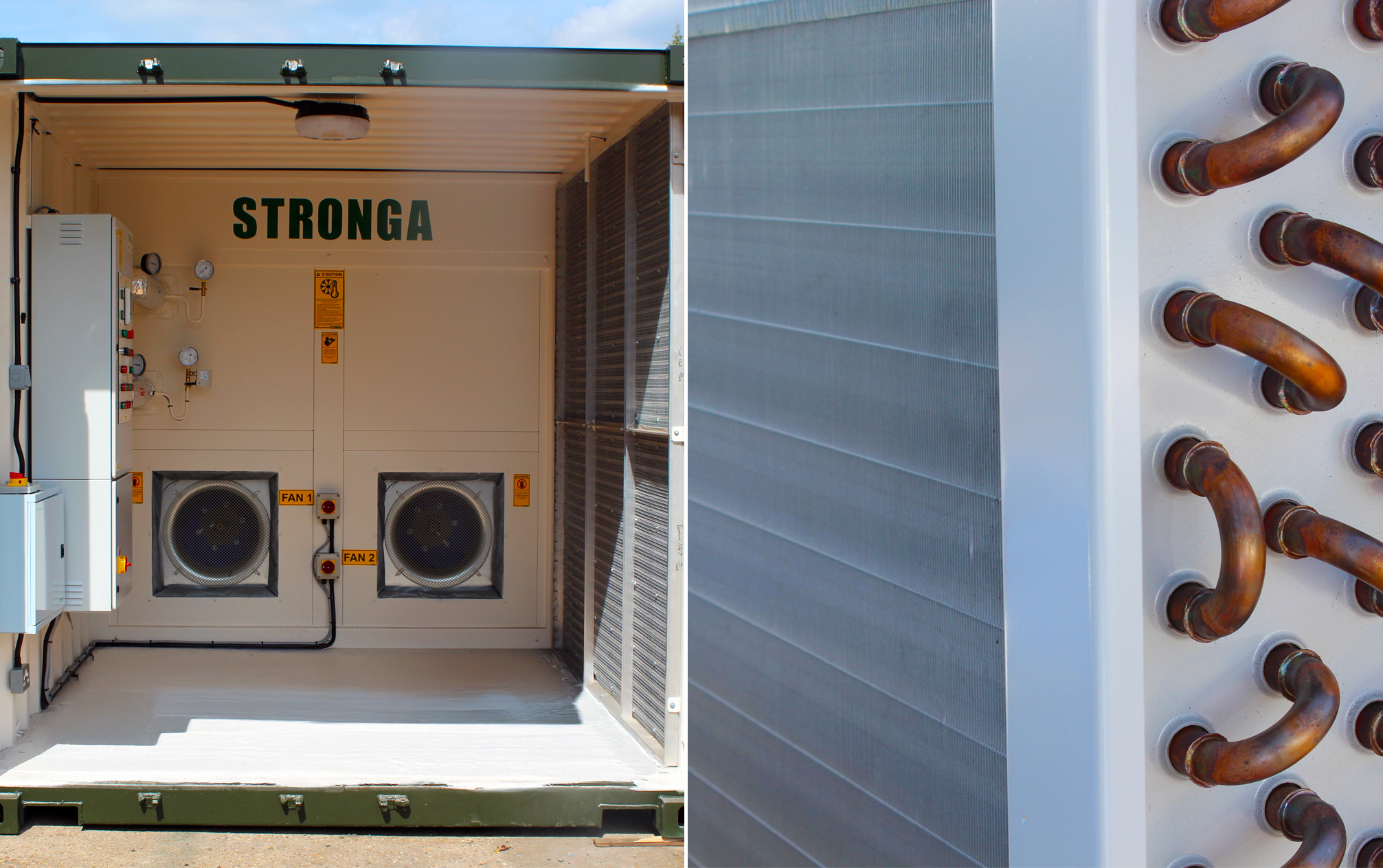
Heatex combines direct-drive, low-noise plug fans with high-efficiency deep-core heating coils to deliver reliable, energy-efficient air handling for demanding industrial drying applications.
The advanced radial fan design provides uniform, full-face airflow with minimal pressure losses, while variable-speed inverter control and soft-start functionality help reduce electricity consumption and mechanical stress. With no belts or associated drive components, the system offers straightforward maintenance and long-term reliability. Key benefits include:
✔ Reduced energy consumption – Efficient fan technology delivers energy savings of up to 30% per annum compared with traditional centrifugal fans.
✔ Consistent heat transfer – Deep-core heating coils distribute heat evenly across the airflow, achieving the specified drying air temperature.
✔ Low-noise – Modern fan blade design supports quieter operation in industrial environments.
✔ Easy maintenance – Accessible heating coils and a fully rubber-sealed fan chamber door simplify inspection and maintenance.
✔ Enhanced safety – Access-door safety sensors trigger shutdown when required, protecting operators from moving components.
Modular, weatherproof, space-saving design
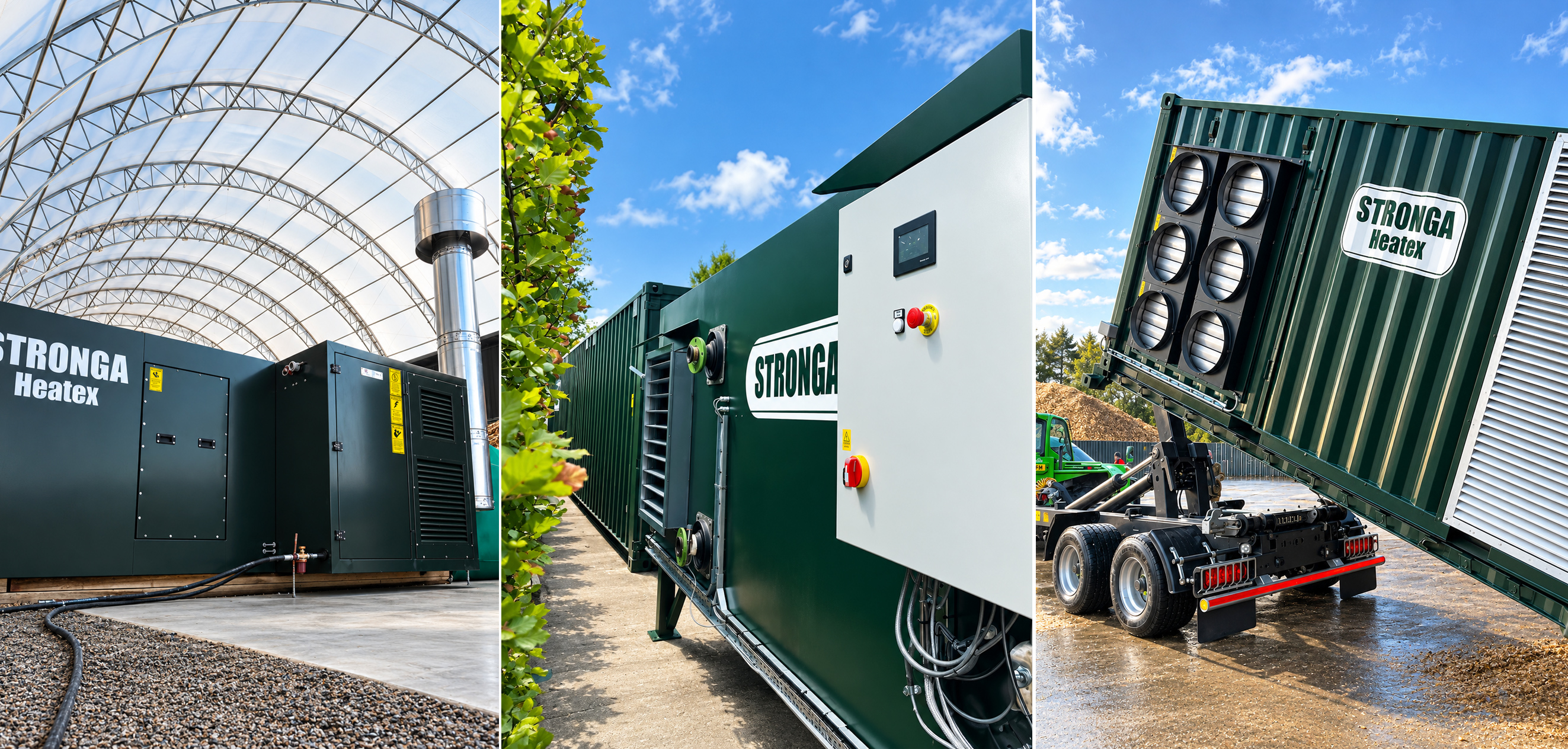
Heatex equipment is housed in robust, weatherproof modular enclosures designed for secure external installation, easy transportation and flexible site integration. The integrated hot air plenum allows the drying system to be arranged in different configurations to suit available space, site layouts and FlowDrya installation requirements. Key benefits of the modular design include:
✔ Reduced building requirements – Minimises the need for dedicated plant buildings and extensive structural foundations.
✔ Compact footprint – Space-efficient modules can be stacked where appropriate, helping maximise available site space.
✔ Flexible installation – Weatherproof housing enables external positioning and greater flexibility when integrating equipment into existing facilities.
Robust & reliable equipment
Heatex systems are engineered for demanding industrial energy and drying applications, delivering reliable, high-duty-cycle performance with the capability to operate for over 8,000 hours per year.
Each bespoke machine is designed around the available thermal energy source, material characteristics and drying requirements. This tailored approach optimises heat transfer, thermal efficiency and operational reliability, helping minimise downtime and reduce the overall cost per tonne of material dried. Robust construction, proven technology and application-specific engineering make Heatex a dependable, long-term investment.

Our design philosophy
Stronga’s technical team carefully evaluates the requirements of every project to develop an optimised, application-specific solution. We work closely with clients to define critical energy parameters, including temperature differential (ΔT) and return water temperatures, which can be essential to the efficient operation of ancillary equipment such as CHP engines. Our integration specialists take a whole-system approach, considering every factor that influences drying performance. This includes drying air quality, airflow through the material, air pressure and air velocity, ensuring the system makes the most effective use of the available thermal energy.
Contact Stronga’s technical team today to discuss your drying project and explore the right solution for your application.
Heatex is a modular, individualised air handling unit, tailor-made on a project-by-project basis depending on a wide range of client-defined variables. Please enquire using the form below to discuss a suitably-scaled heat exchanger for your net zero carbon project.


