


Beyond the well-known benefits of plant disease reduction and recycling, Stronga have noticed that organic growers are often un-aware of steam heat treatment’s remarkable impact on flavour in fruit and vegetable crops grown in steam treated growing substrates. The purpose of this article is to outline the overall benefits of steam pasteurisation on produce flavour.

How Does Substrate-Steaming Enhance Flavour?
FlowSteama indirectly improves the flavour of fruits and vegetables by creating a healthier, nutrient-rich environment for the plant. By transforming the growing medium, crops better develop sugars, acids, aromatics and colour. The impact of steamed growing substrates on flavour is linked to the overall health and vitality of the plant, driven by; increased nutrient availability, reduced disease and pest pressure, enhanced root development and optimal nutrient uptake for fuller natural flavour compounds.
Plants grown in steam treated growing materials often develop more extensive and robust root systems, which improves their access to water and nutrients, further supporting healthy growth and better flavour.
Steam pasteurising growing substrates offers the following benefits:
Removes flavour-supressing microbes ✓ Preserves heat-tolerant beneficial microbes ✓ Improves nutrient-cycling and minimises bitter flavour notes ✓ Breaks down organic matter into soluble sugars, amino acids & phenolic compounds ✓ Boosts nutrient availability ✓ Prevents growth of anaerobic ‘off-flavours’ ✓ Reduces plant stress, prioritising the production of sugars, flavonoids, carotenoids and aroma volatiles ✓ Improves flavour consistency across harvests; fresher, sweeter and more aromatic ✓
FlowSteama Improves Microbial & Organic Chemical Balance
When soil, spent coir or any other recycled growing substrate is steam-pasteurised (80°C+), most competing and flavour ‘spoilage’ microorganisms, especially fungi such as Trichoderma and Penicillium are eliminated, while beneficial thermotolerant bacteria (such as Bacillus and Thermobispora) survive and dominate the substrate ecology.
After steaming, these beneficial microbes recolonise the substrate faster than harmful microbes, improving plant defences and increasing the production of secondary metabolites (organic chemicals responsible for rich, aromatic flavours). These beneficial microbes release enzymes that break down lignin and cellulose into simpler sugars, amino acids, and volatile organic compounds that plants can easily absorb. This microbial environment improves nutrient mineralisation and reduces stress metabolites associated with harsh-tasting or bitter produce.
The video below shows the Compact FlowSteama steam pasteurising soil material, to showcase the overall working process of the steam equipment.
Steam Pasteurisation Enhances Nutrient Availability & Aroma Compound Development
Steam heat treatment alters the organic chemical composition of the substrate, boosting the availability of soluble sugars, phenolic compounds, and amino acids, all of which enhance aromatic and sweet flavour compounds in crops.
By steam pasteurising decomposing organic material, the anaerobic microbial activity which generates sulphurous or earthy odours is minimised. The result is a cleaner nutrient profile that supports the synthesis of volatile organic compounds like aldehydes, ketones, and terpenes, which contribute to a richer aroma and taste.
Steam Pasteurisation Delivers Bigger, Better, More Flavoursome Crops
Plants grown in untreated substrates often face pathogen competition and oxidative stress, diverting their metabolic focus from flavour compound synthesis toward defence. Steam releases a nutrient flush in the growing media substrates, this reduces plant stress, allowing for a higher accumulation of sugars, flavonoids, and carotenoids; the molecular basis of sweeter, more vibrant produce.
Plants grown in a steam-treated growing media experience;
• Fewer root-zone pathogens
• Reduced oxidative and abiotic stress
• Enhanced nutrient uptake efficiency & sugar metabolism
• Improved physiological stability

FlowSteama: A Practical, Sustainable Solution for Organic Growers
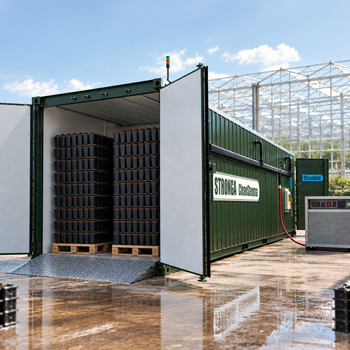
FlowSteama provides growers with a reliable, clean-steam solution to recycle spent growing medium, eliminating harmful pathogens and improving overall crop quality and flavour.
Utilising a soft water treatment plant, FlowSteama produces steam that is naturally soft and pH neutral, helping to avoid corrosive issues associated with hard-water steaming systems while maintaining a substrate pH that supports optimal propagation and nutrient uptake. This pH stability improves the flavour in delicate crops sensitive to subtle root-zone conditions.
Steam-treated recycled growing mediums enable stronger, healthier plants capable of producing sweeter, more aromatic, more vibrantly coloured fruits and vegetables.

1. A win-win for growers and consumers; better flavour translates to improved marketability and premium pricing.
2. Double the fruit yield, steamed substrate delivers a higher quantity of high-quality crops.
3. Recovery of spent end-of-crop cycle, growing materials; spent coir, soil and other substrates can be safely steam-treated for reuse, reducing reliance on imports and single-use growing media purchasing.
4. Increased control over growing conditions; growers maintain a predictable, pathogen-minimised substrate every cycle, supporting stable yields with excellent flavour.
5. Cleaner, safer growing conditions for premium produce; harmful pathogens are minimised without damaging beneficial thermotolerant microbes, supporting healthy root development and stronger plant immunity.
How FlowSteama Delivers Pasteurised Growing Substrate
1. Loading the Spent Substrate: Unpasteurised spent growing media (soil, coir, peat, blends etc.) is loaded into the infeed hopper on the ‘dirty’ side. Once the hopper is plugged, the batch steaming cycle can begin.
2. Injecting Super-Heated Steam: Super-heated low-pressure steam at 200°C enters the insulated vessel from the SteamBoila. The load rapidly becomes steam saturated, raising the temperature of the material, blowing the plant cells apart and destroying the host material’s pathogenic microbes.
3. Achieving Full Steam Penetration: Steam engulfs and penetrates the material while the hydraulic PulseWave™ moving floor continuously agitates the load, ensuring all material has been suitably heat treated.
4. Monitoring & Logging Performance: Temperature sensors continuously log data to the SteamStation™ HMI. The smart logging function provides evidence-based time-at-temperature requirements.
5. Discharging Pasteurised Material: Once pasteurised, the clean, reinvigorated growing material self-empties from the moving floor into the ‘clean’-side cross-feed auger, then on to storage or application.
The video below demonstrates the FlowSteama working process.
What is the Investment Case for Steaming Substrates?
Substrate steaming creates significant value for growers by directly reducing input costs by circa 80% in relation to single-use substrates purchased, every season, every year, while also improving crop quality and enabling circular use of growing media. The result is a system that lowers operating expenditure and increases revenue by doubling fruiting yield, while improving long-term resource efficiency.
Financial Savings Through Recycling Substrates
• Spent substrates (coir, peat etc.) are transformed with steam into premium quality growing media.
• 80% reduced demand for the recurring cost of buying imported or single-use substrates.
• Decreased transport and logistics expenditure.
• Reduced substrate cost per-crop.
Higher-Value Produce Through Improved Quality
• Steam-treated substrates support higher levels of natural sugars, aromatics and colour compounds.
• Improved overall taste and appearance.
• Increased consumer preference and demand for organically grown, chemically-free fruits and vegetables.
• Better flavour directly translates to price advantages – allowing your organically grown produce to out-perform competitors in higher-value markets.
• Improved reputation of your growing operation.
Reduced Yield Losses & More Predictable Output
• Lower crop-loss percentages per growing cycle.
• Reduced risk and operational uncertainty.
• Double the fruit yield.
Lower Chemical & Fertiliser Expenditure
• Steam pasteurisation eliminates the need for fungicides, disinfectants and chemical fertilisers.
• Reduced chemical sprayer/labour costs.
Operational Control & Reduced Supply Chain Exposure
• Regenerating spent substrates on-site allows growers to significantly reduce dependence on external substrate suppliers and volatile commodity markets (e.g. coir).
• Many substrates such as coir are becomingly increasingly scarce. FlowSteama recycles existing spent substrates, eliminating delays to your growing operation.
• Improved control over quality parameters.
• Strengthened short and long-term financial resilience.
Overall, the grower’s business case for steam pasteurisation is strong: Lower OPEX + higher quality of grown products + lower risk = stronger profitability and competitive advantage. Stronga scale each FlowSteama to the customer’s individual requirements. Contact our friendly team for steam pasteurisation advice relative to your growing operation – enquiries@stronga.com


Share this post